
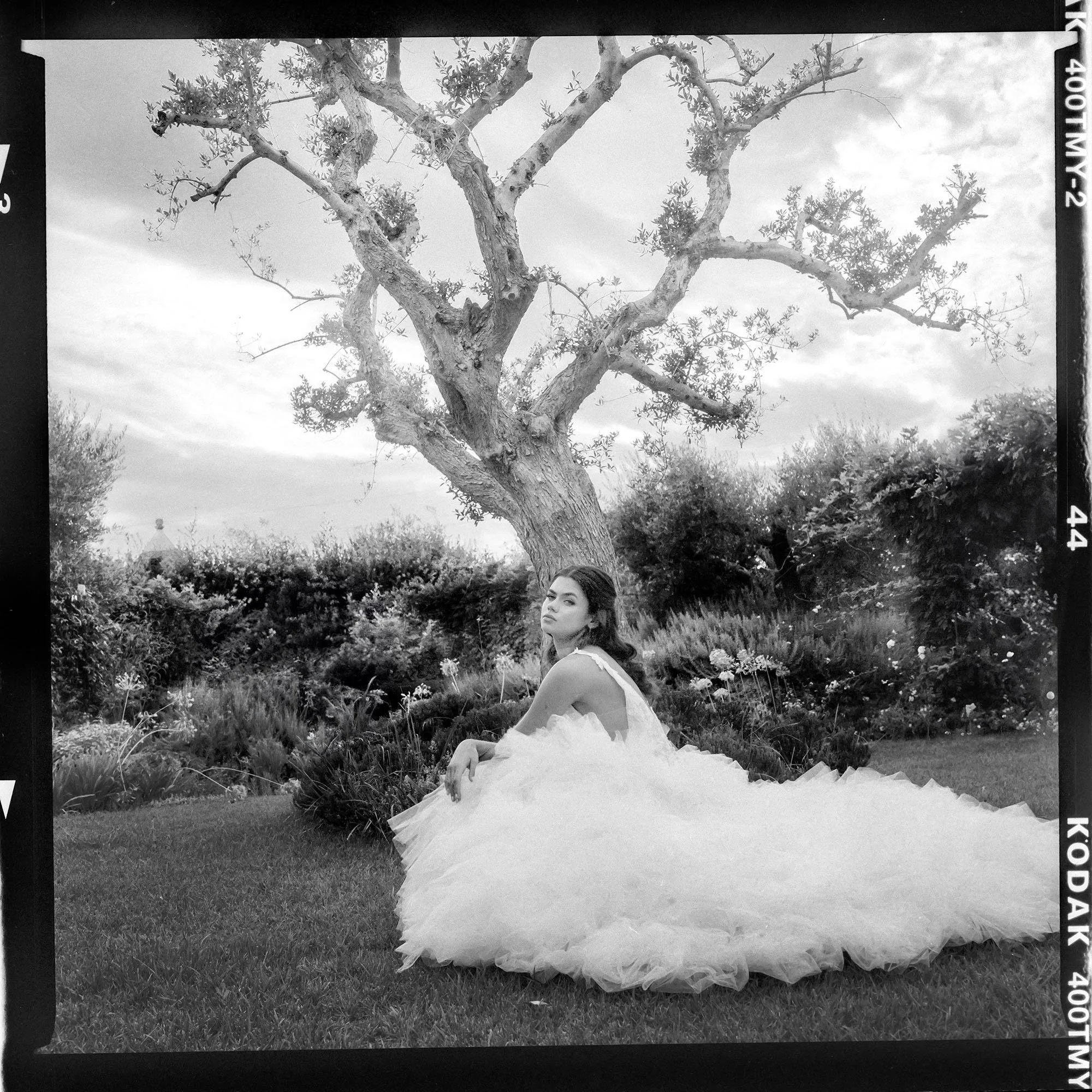
From the return of imperfect beauty to the differences between 35mm and medium format: what you should know before hiring a film wedding photographer.
Film photography is back, and its influence on modern wedding photography goes far beyond the photographers who actually shoot on film. Natural colours, visible grain, direct flash, motion blur and imperfect compositions have become defining elements of contemporary wedding imagery. Even digital photographers are increasingly trying to recreate the analogue aesthetic, borrowing its textures, colours and spontaneous character.
Perhaps this comeback tells us something about the times we're living in. In a world dominated by artificial intelligence, heavily edited images and an almost obsessive pursuit of perfection, people are rediscovering the beauty of imperfection. Film photography feels more human, more unpredictable and somehow more authentic. Those little imperfections that digital technology spent decades trying to eliminate have suddenly become desirable again.
At Rellini Art Studio, around 20% of our couples now choose to include film photography alongside their digital wedding coverage. Some are attracted to the colours, others love the nostalgic atmosphere, while many simply want to add something distinctive to their wedding story.
But there's a question that doesn't get asked nearly enough: what kind of photographs will you actually receive, and what is their real quality?
Because not all analogue photography is created equal, and understanding the differences can completely change what you should look for when hiring a film wedding photographer.
01 / WHEN IMPERFECTION BECOMES FASHION
The curious relationship between analogue photography and today's wedding trends
We photographed our first weddings when we were very young, back when film wasn't a creative alternative or a fashionable addition to a photography package. It was simply how photography worked. Digital cameras hadn't yet become the standard for professional weddings, and every photograph required a little more consideration: the film you loaded, the available light, the exposure and the limited number of frames you could shoot.
Looking at today's trends, we sometimes smile at how much things have changed.
Back then, a blurred photograph was generally something you tried to avoid. It often meant that the shutter speed was too slow for the available light, perhaps because you had loaded a film that wasn't sensitive enough. Strong direct flash in a dark room was frequently a practical necessity rather than an artistic choice. Film couldn't magically reveal details in the shadows, so photographers had to introduce flash, often producing the hard shadows and high-contrast look that today is frequently described as editorial or Vogue-inspired.
Even visible grain was something many photographers tried to control. Slower films, when the light allowed, were preferred for their finer grain and greater detail.
Today, motion blur, direct flash and pronounced grain have become desirable elements of a photographic style. And we actually find this evolution fascinating. Photography is an artistic language, and its rules are constantly being rewritten.
The difference lies in understanding whether an imperfection is intentional or simply the consequence of not knowing how to use the medium.
A blurred photograph can be incredibly beautiful. A direct-flash portrait can have extraordinary energy. But knowing how to create those results deliberately is very different from accepting every technical mistake as an artistic statement.
02 / NOT ALL FILM PHOTOGRAPHY IS THE SAME
Understanding point-and-shoot, professional 35mm and medium-format cameras
One of the most common misconceptions about film photography is that every analogue camera produces roughly the same quality of image. In reality, the differences can be extreme, especially when you start looking beyond the colours and nostalgic atmosphere.
There are three common approaches worth understanding.
Point-and-Shoot Cameras — The Charm of Imperfection
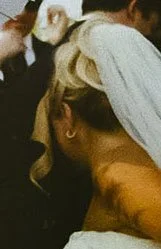
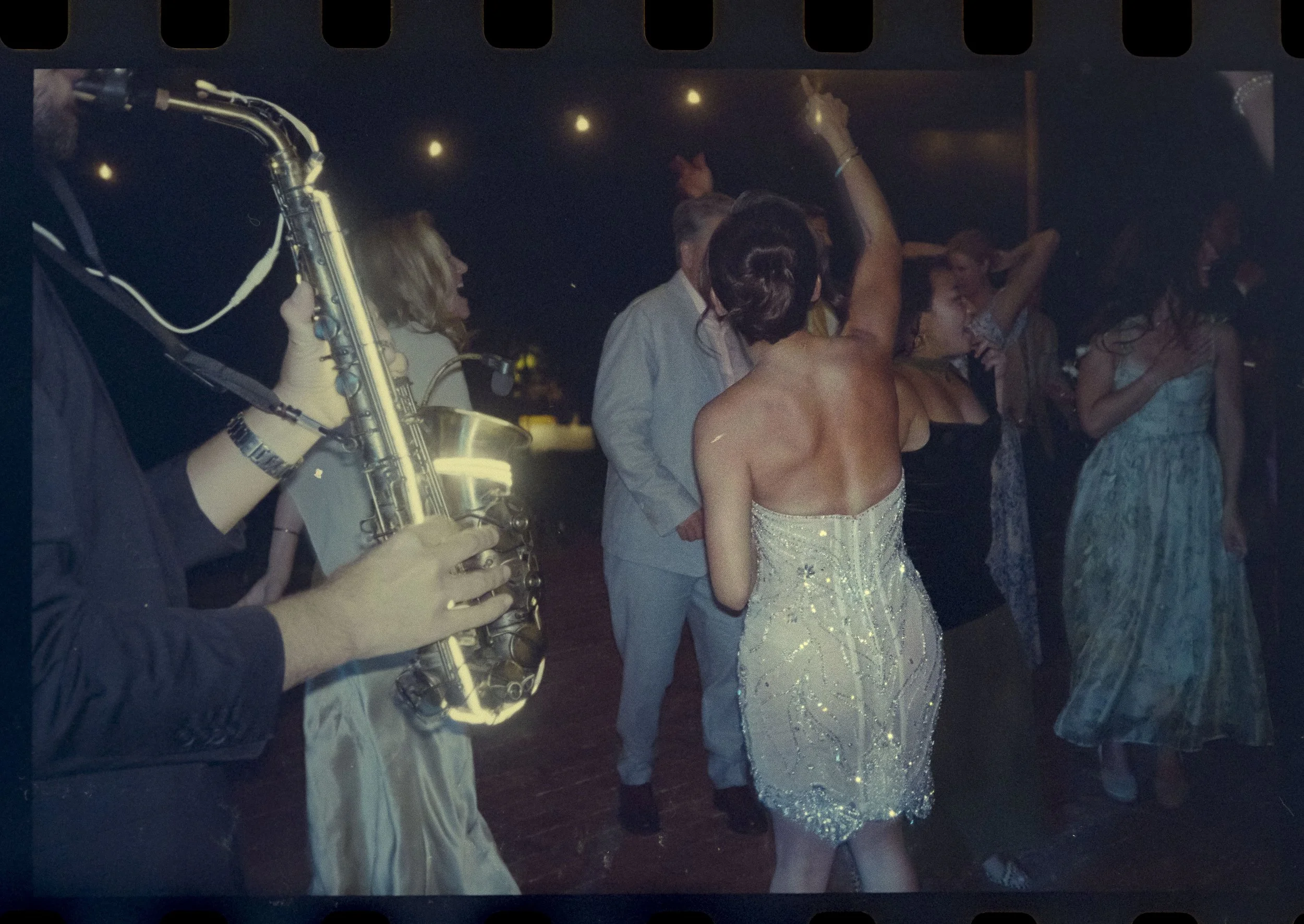
Point-and-shoot film cameras are compact, simple and often associated with the casual snapshots of the 1990s. They're particularly popular for wedding parties, direct-flash portraits and spontaneous moments because they produce a relaxed, sometimes unpredictable aesthetic.
There's absolutely nothing wrong with this approach if that's the look you're after. But it's worth remembering that most point-and-shoot cameras use exactly the same 35mm film as professional cameras. What usually separates them is the quality of the lens, the focusing system and the amount of control over exposure.
The image here is soft, with very limited detail. On a phone screen, this might not be particularly evident. Zoom in, however, and the limitations can become obvious and sometimes disappointing.
Professional 35mm Cameras — The Classic Analogue Experience
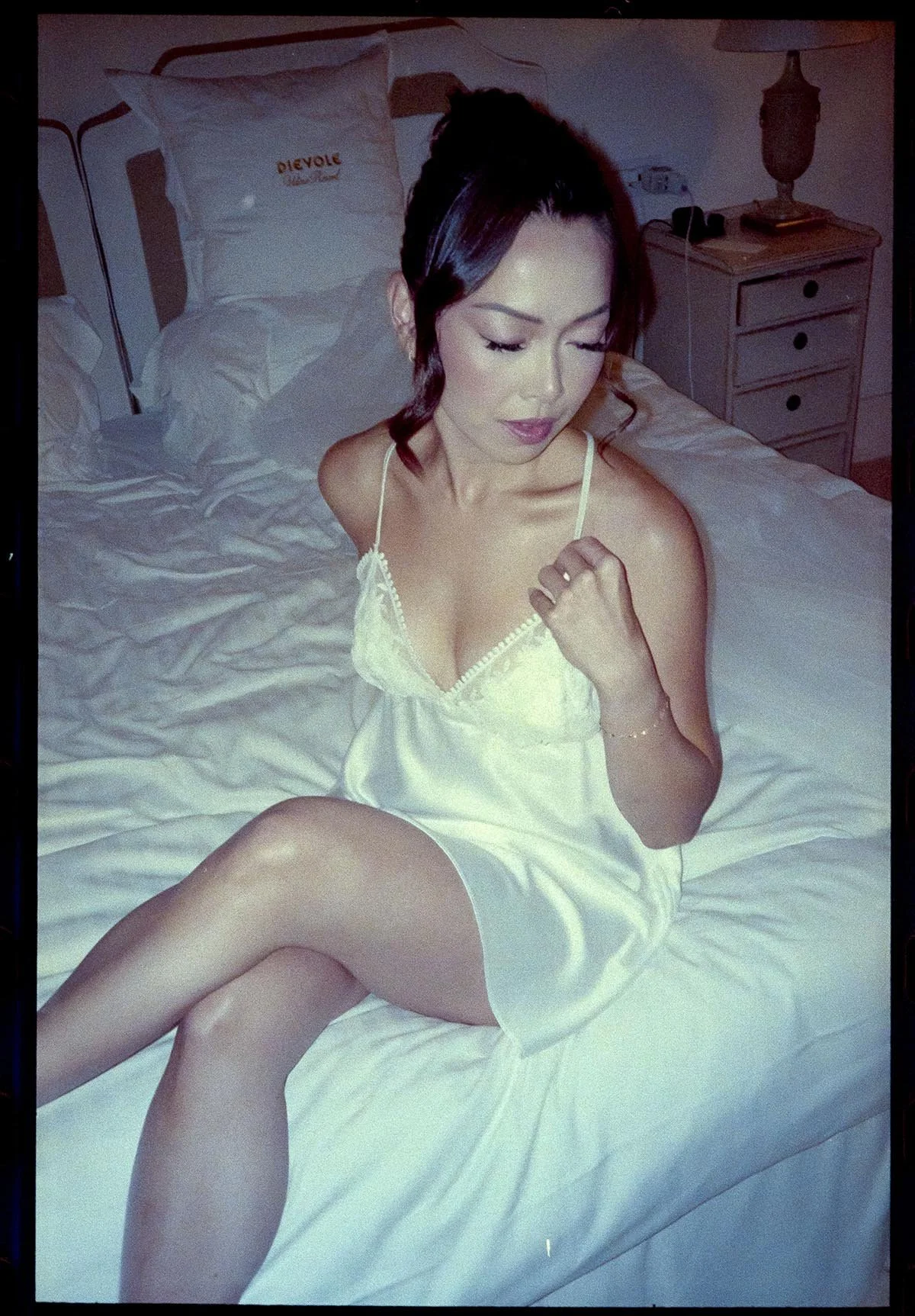
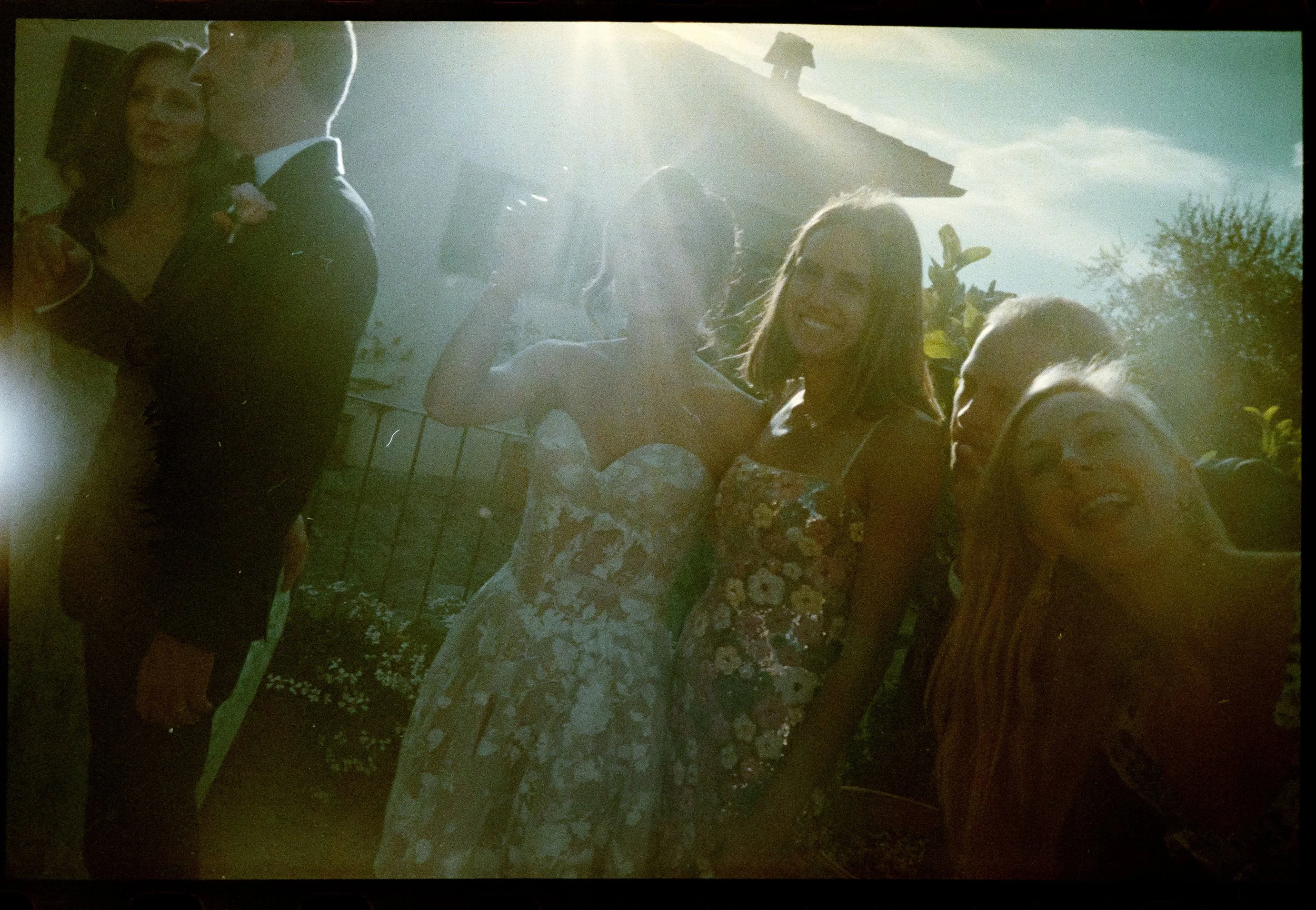
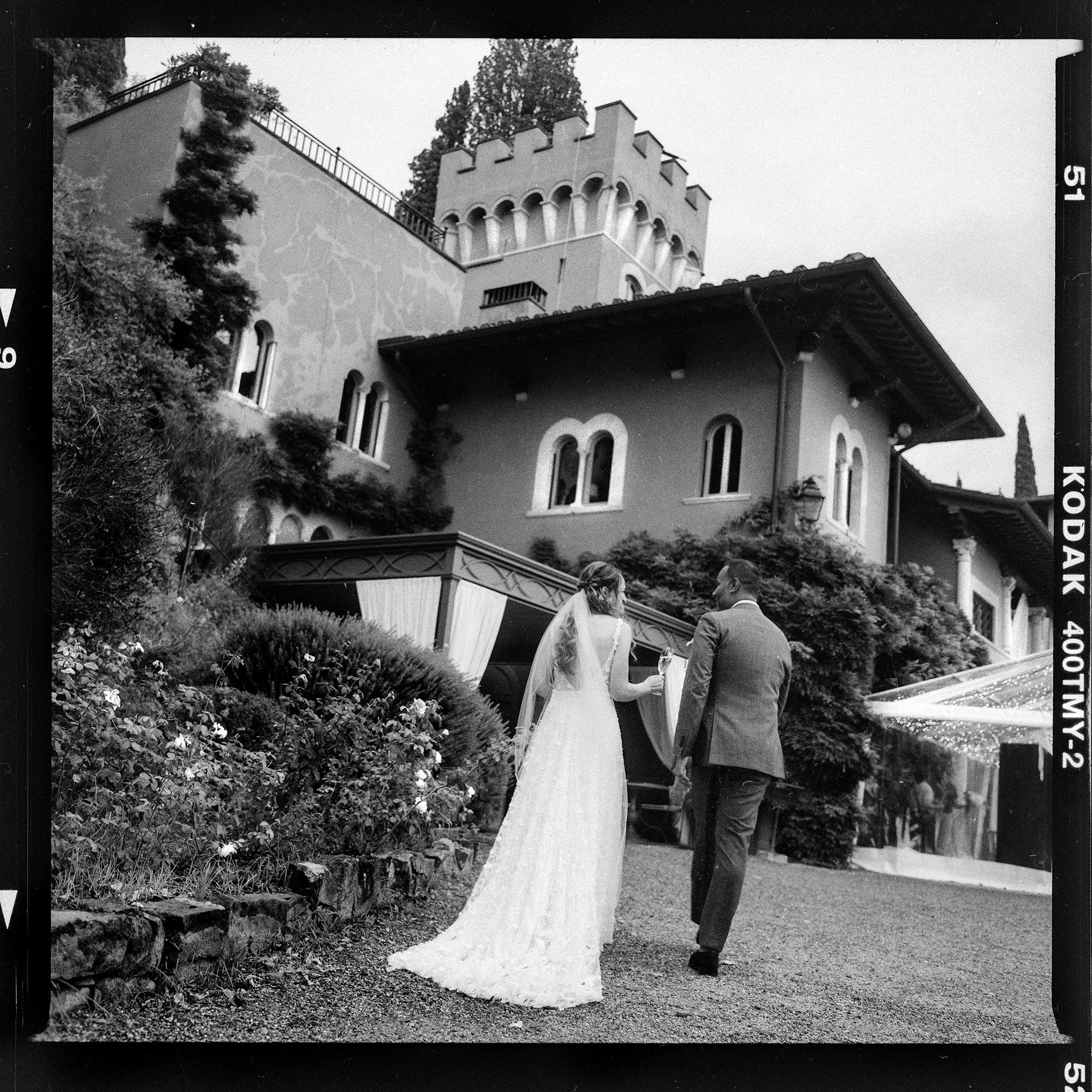
Professional 35mm cameras offer greater control, more reliable focusing and generally much better optics. With a good lens, correctly exposed film and professional scanning, the results can be beautifully detailed, with the distinctive grain and tonal character that make analogue photography so appealing.
This was the format used by countless professional photographers before the digital era, and it remains an excellent choice today, particularly when film is intended to complement digital wedding coverage.
However, the negative itself is still the same size as the one inside a typical point-and-shoot camera. A better camera and lens can produce a much cleaner, sharper image, but they don't increase the physical dimensions of the film.
For that, we need to move to another format entirely.
Medium Format — Where the Difference Becomes Extraordinary
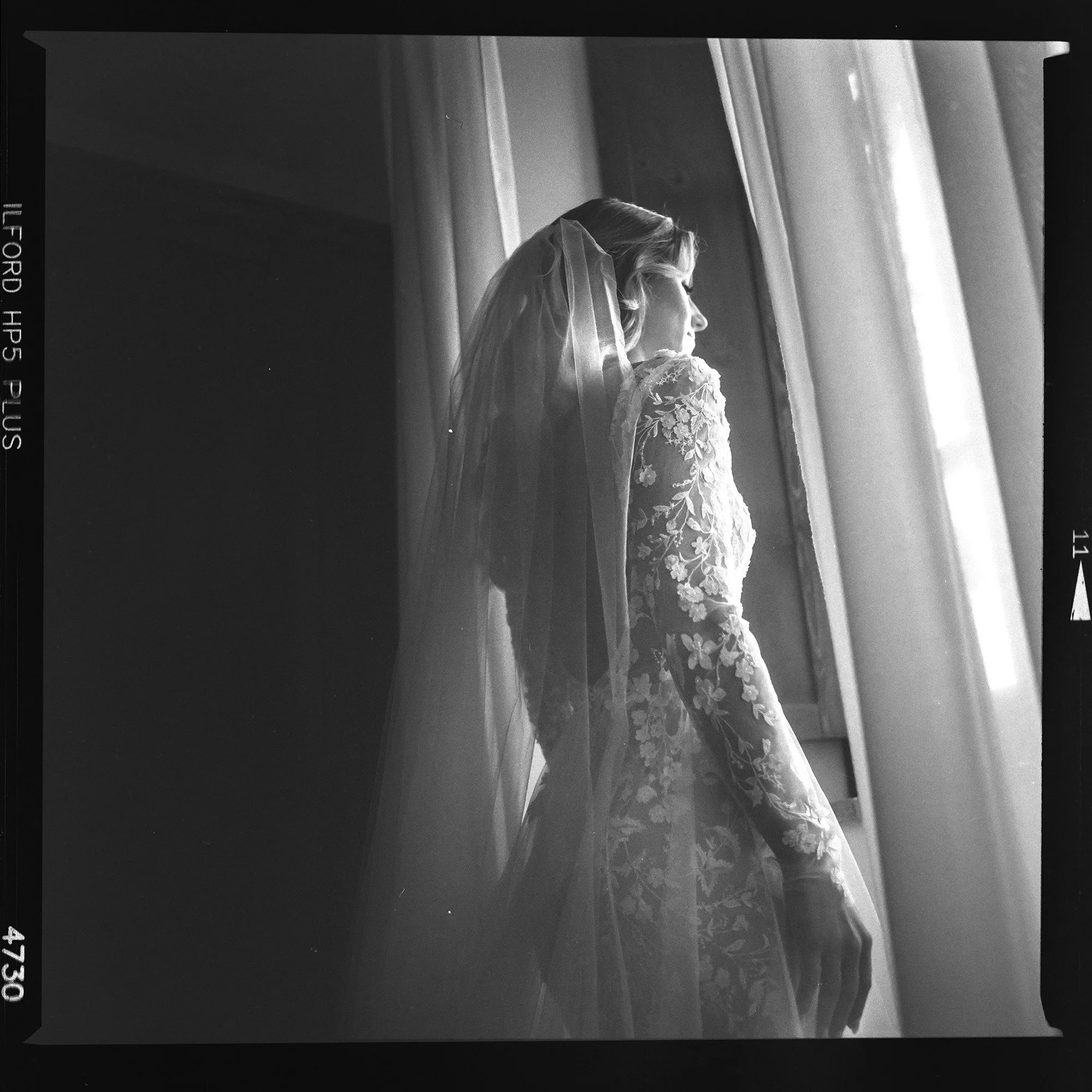
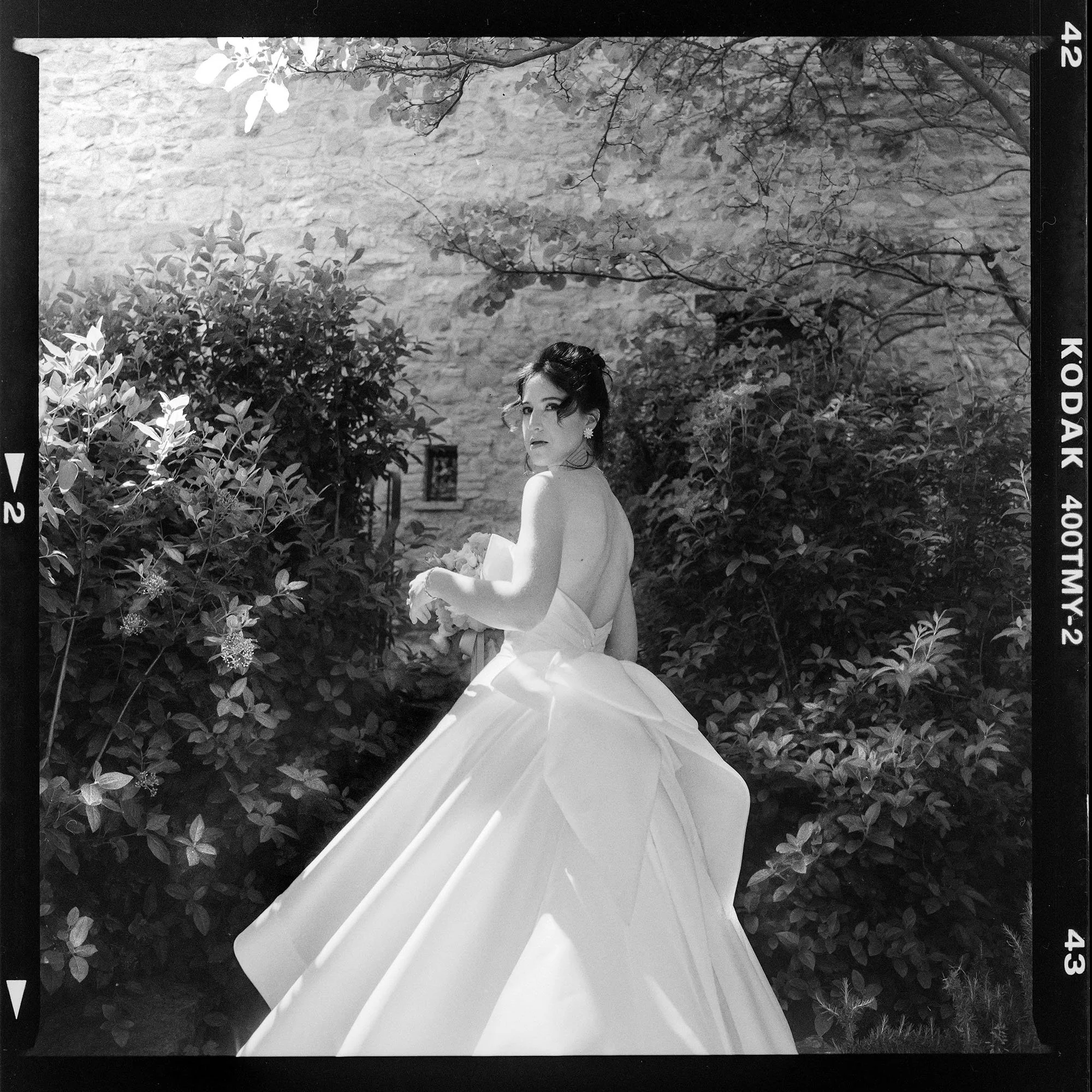
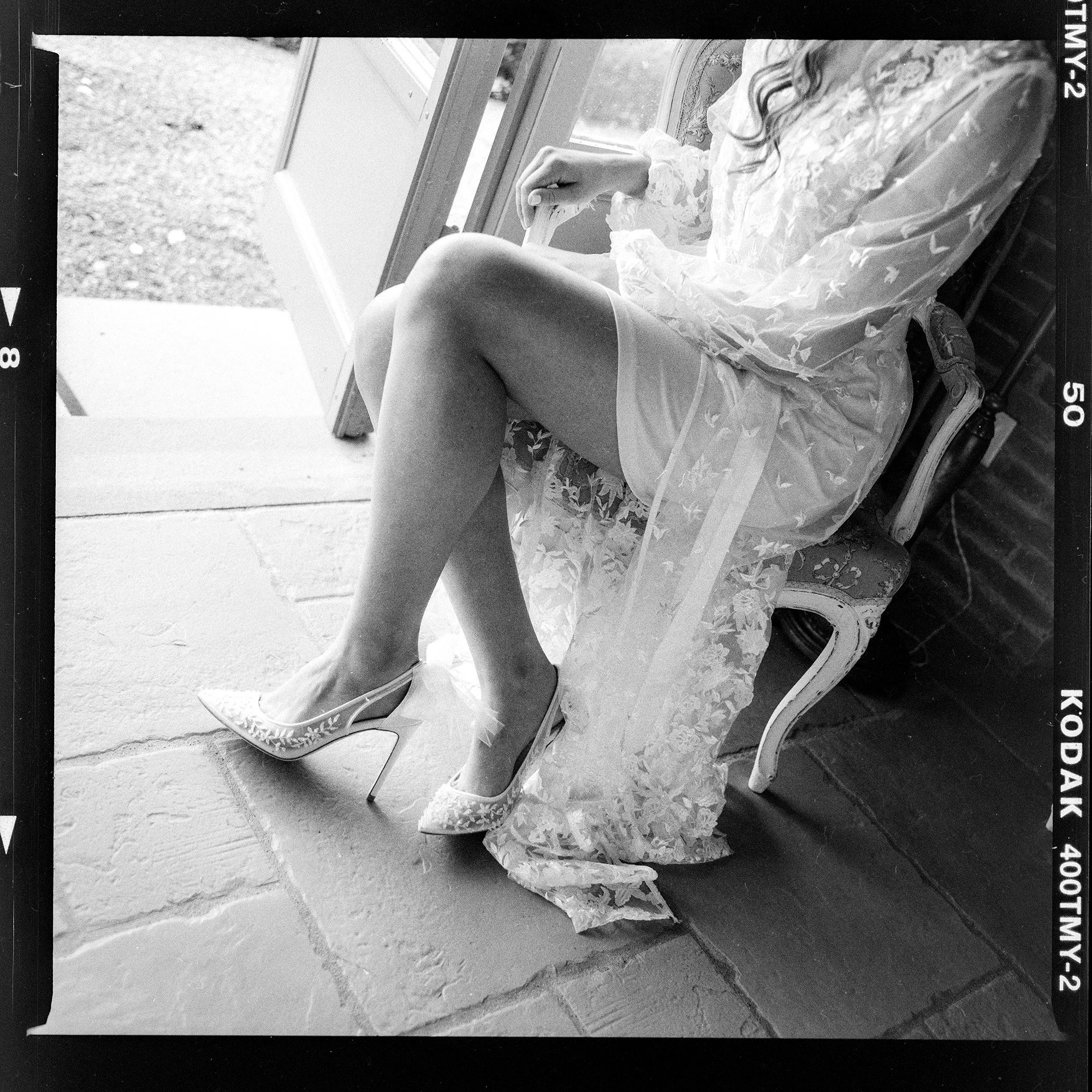
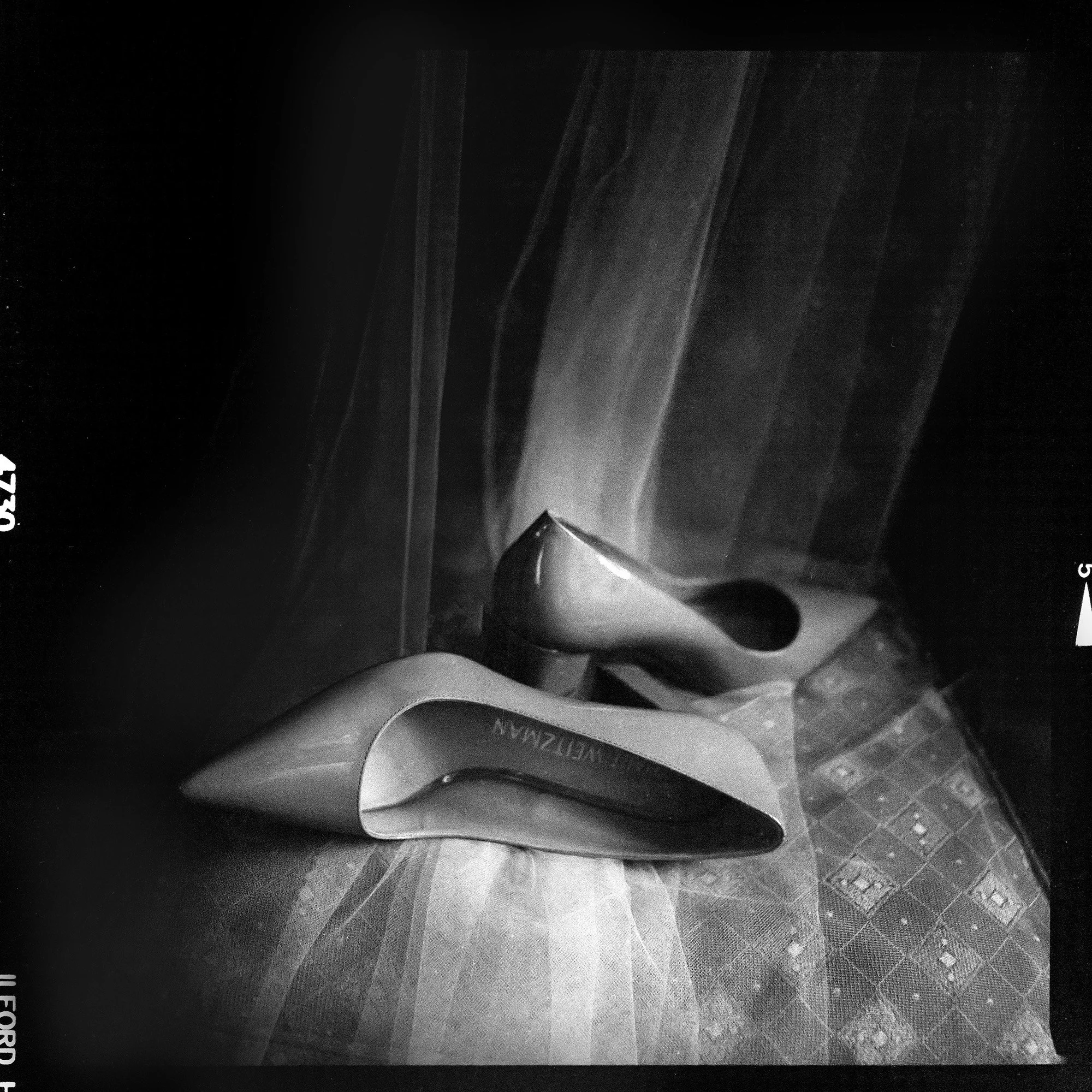
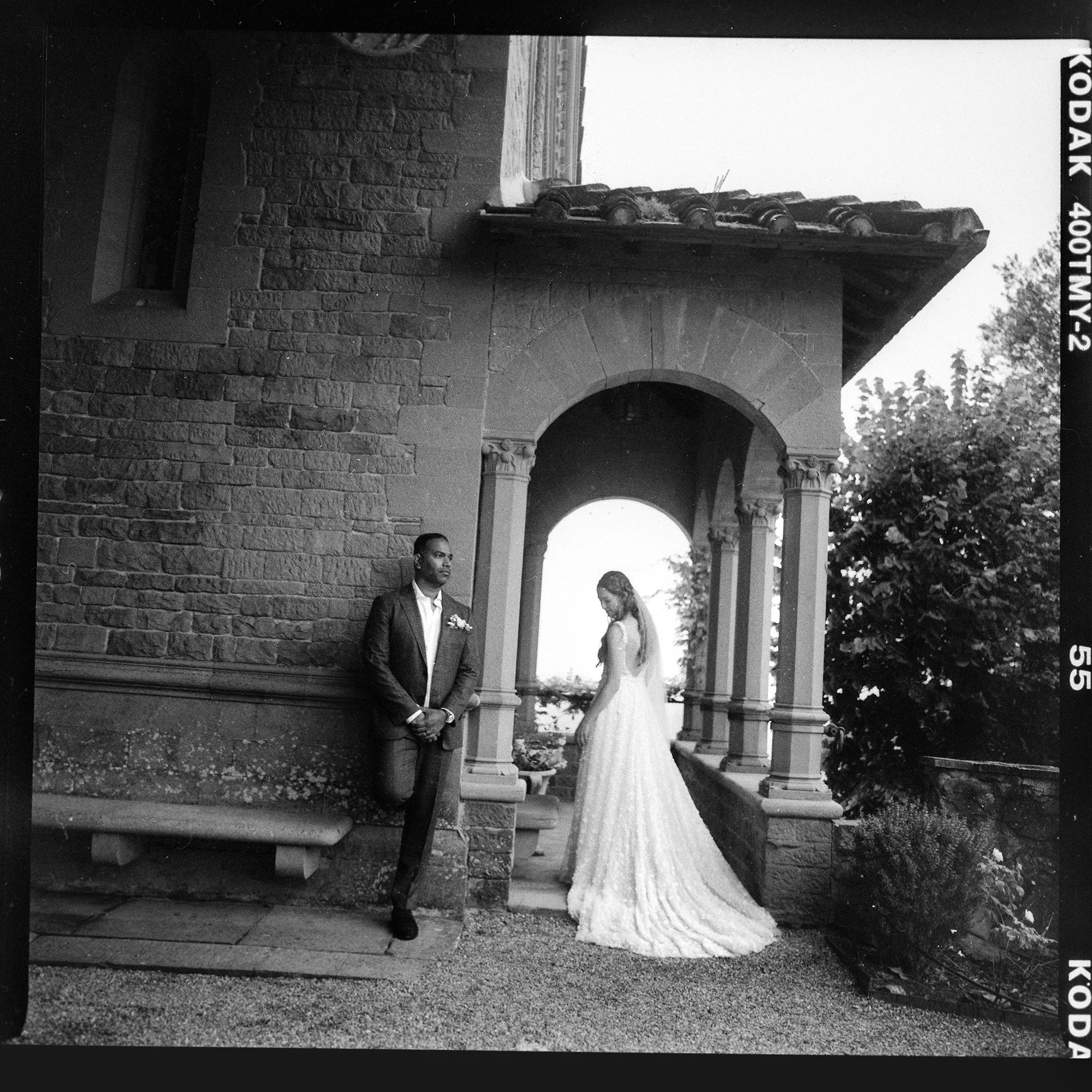
Medium-format cameras use film that is significantly larger than 35mm. This means more surface area to record information, allowing finer detail, smoother tonal transitions and more subtle textures, particularly when photographs are enlarged or printed.
There are several medium-format systems, including 6×4.5, 6×6 and 6×7. Each has its own characteristics and photographic traditions.
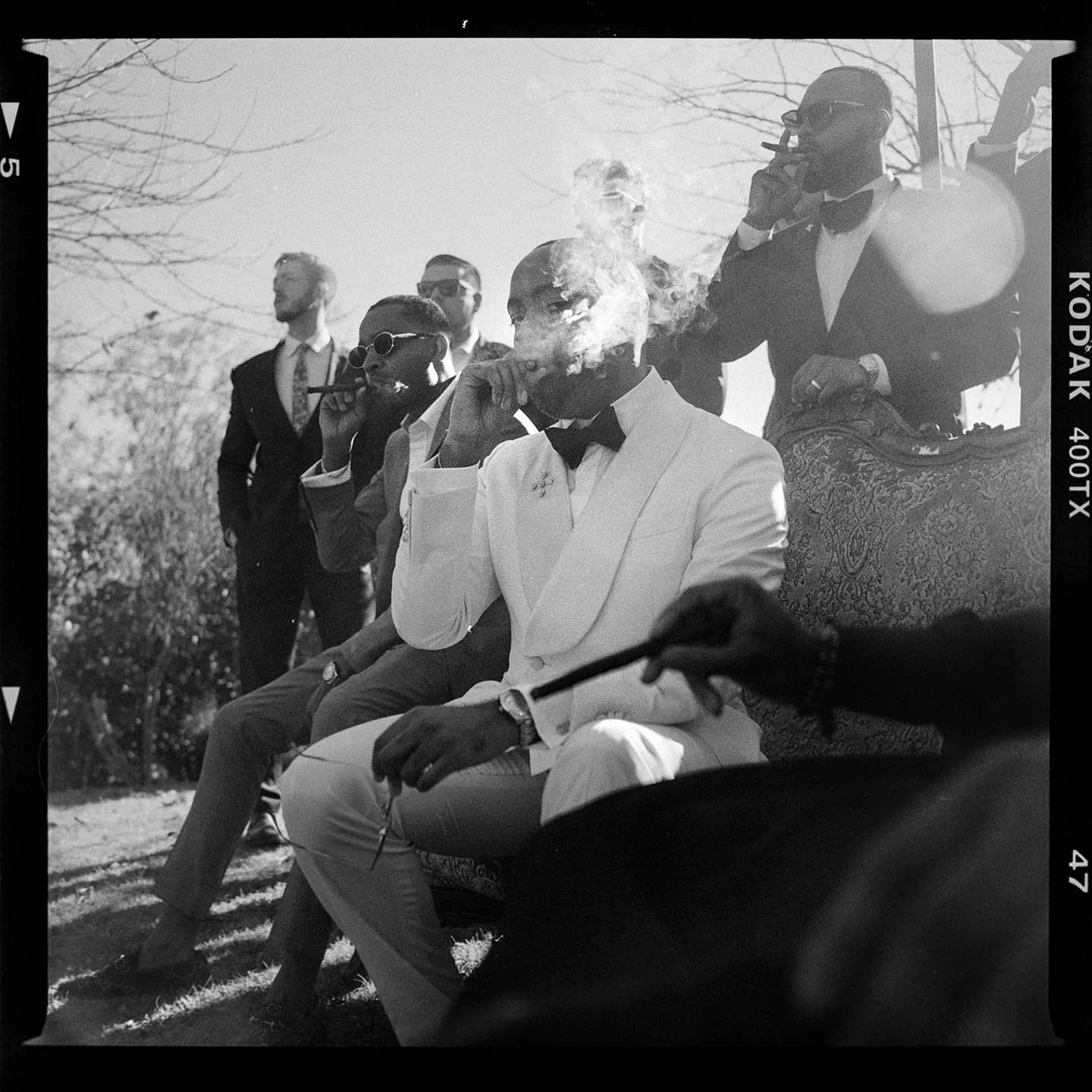
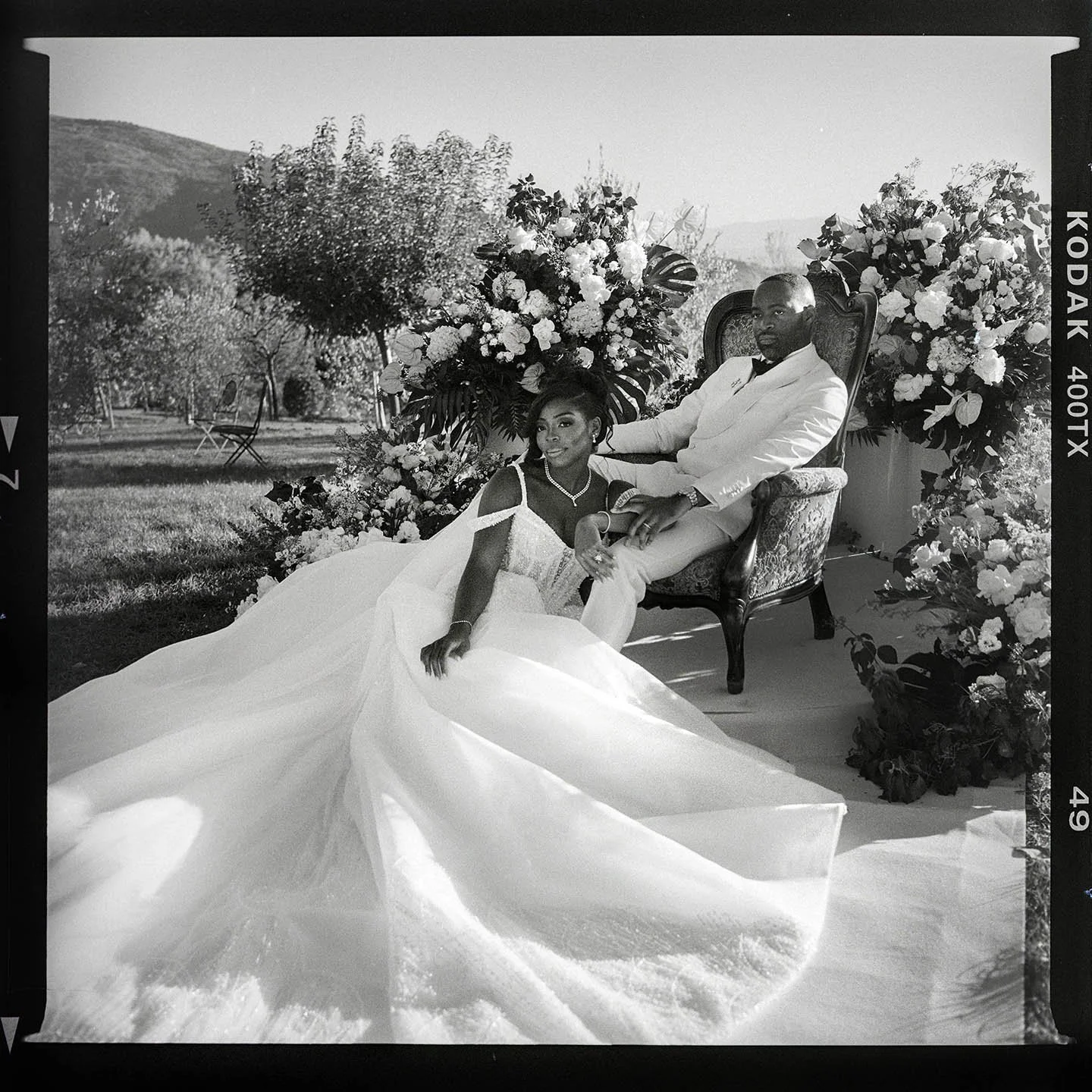
At Rellini Art Studio, we've chosen the 6×6 medium-format system, which creates beautiful square negatives measuring approximately 56 × 56mm, with an image area roughly four times larger than standard 35mm film.
We've always had a particular affection for this format. The square composition encourages a different way of seeing, while the larger negative offers wonderful detail, delicate tonal transitions and magnificent black-and-white results. It feels especially suited to portraits, where the relationship between the subject, the light and the surrounding space becomes particularly important.
And there's something about a beautifully printed 6×6 portrait, surrounded by a generous white passe-partout, that immediately brings to mind the atmosphere of a photographic gallery.
POINT AND SHOOT CAMERA
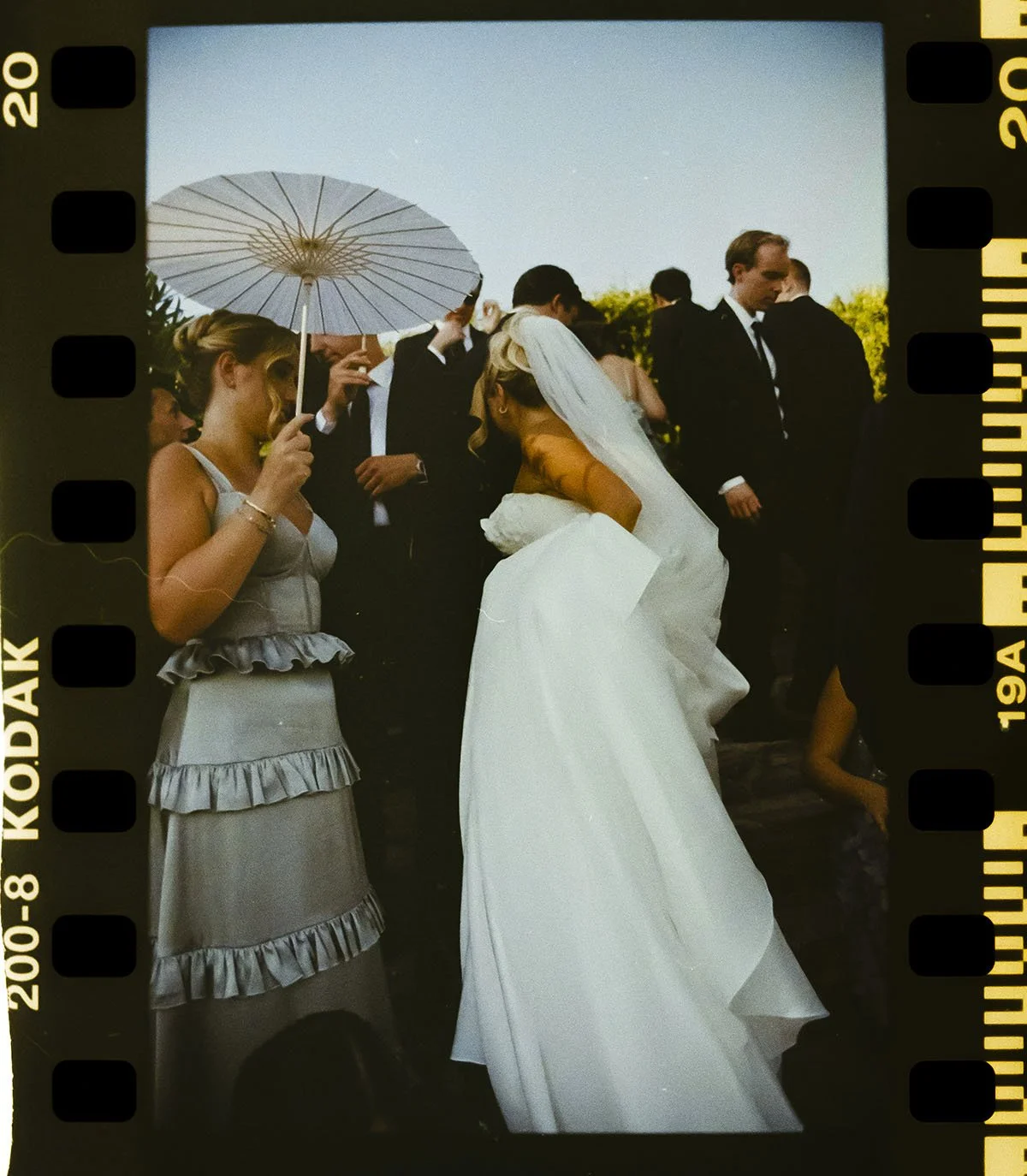
35MM CAMERA
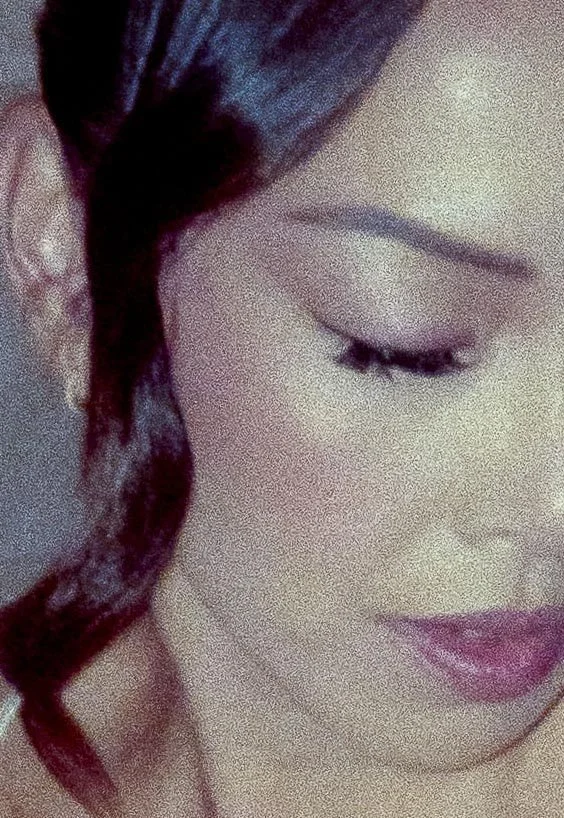
MEDIUM FORMAT CAMERA
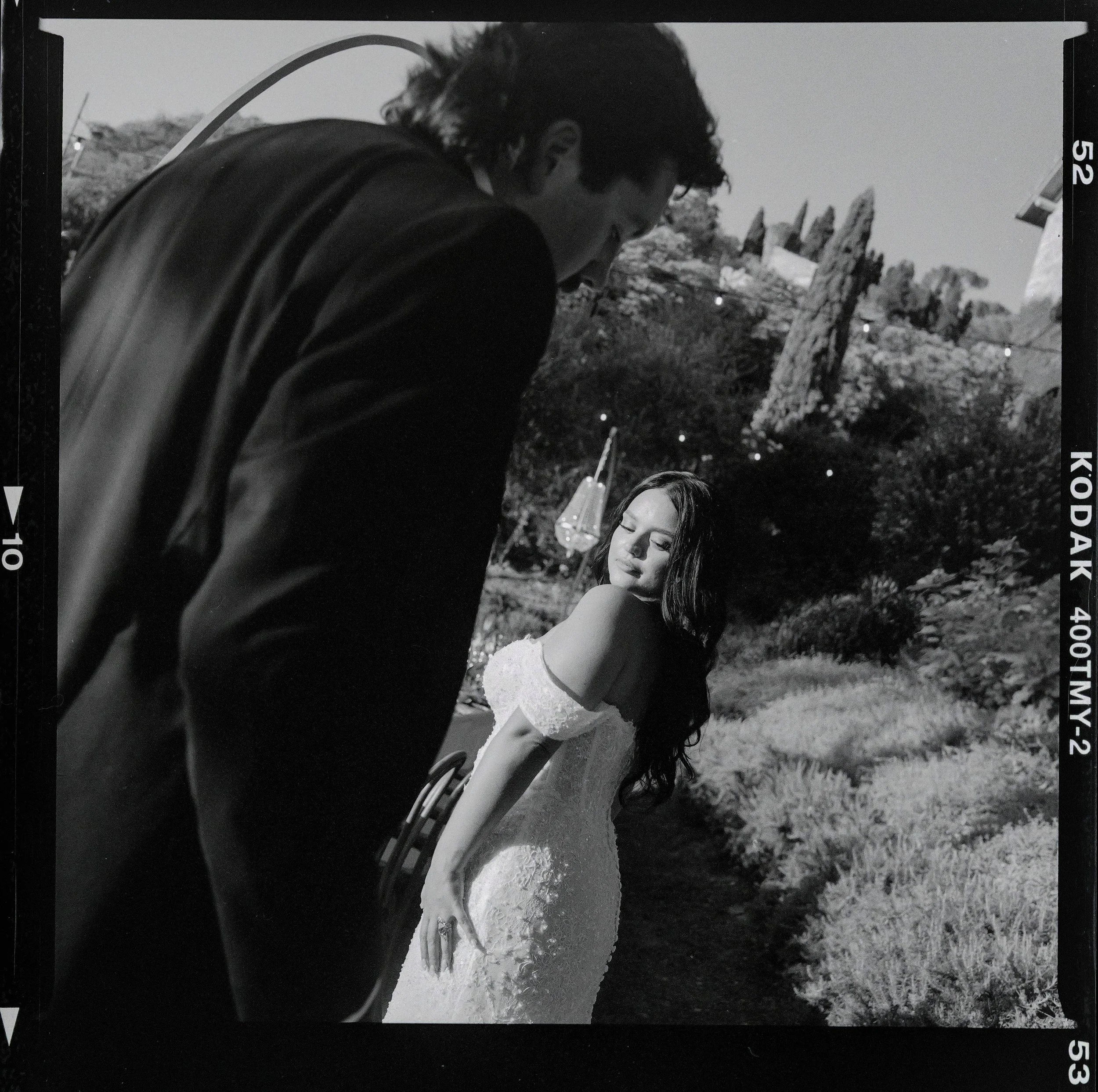
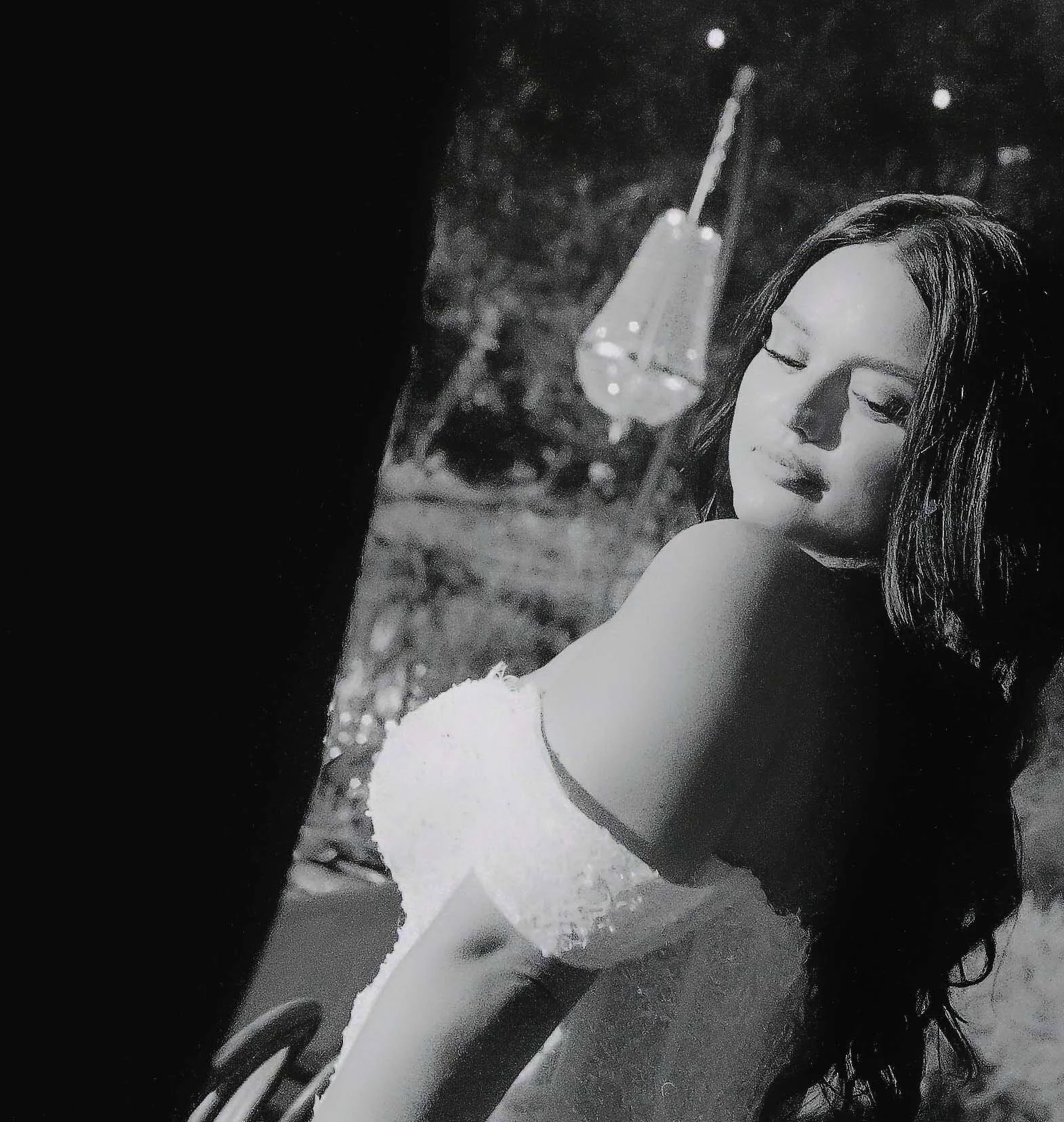
to give you a better understanding of the difference in detail:
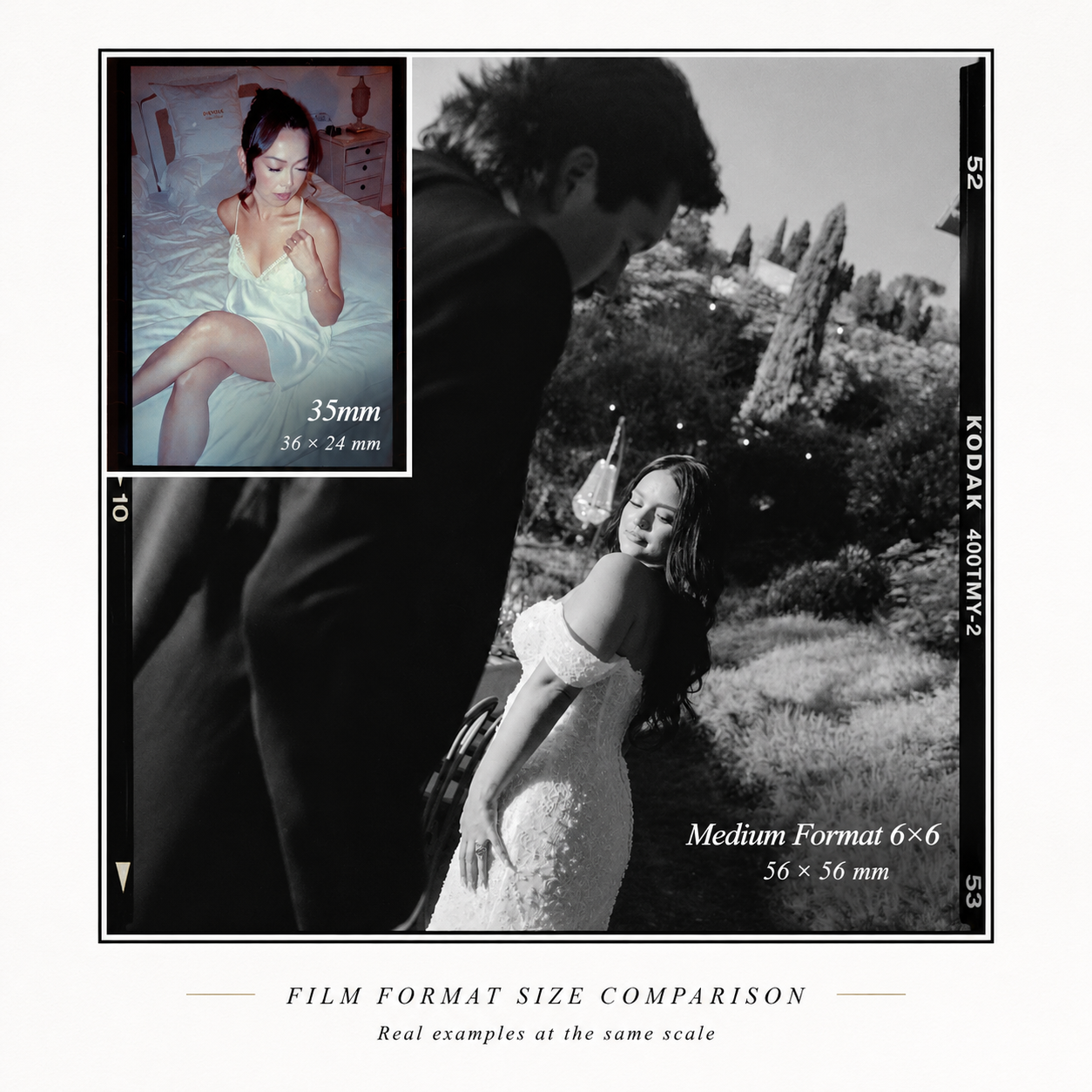
03 / COLOURS, RESOLUTION AND THE REAL QUALITY OF FILM
Beautiful colours don't necessarily mean accurate colours
Many couples choose film photography because they love its colours. But here's something worth knowing: the colours are influenced primarily by the film stock, exposure, development and scanning process, rather than the camera format itself.
Different films produce different interpretations of reality. Some are known for warm skin tones and delicate pastel colours, others for stronger contrast, deeper saturation or cooler tones. The laboratory also plays an important role, because scanning and colour correction can significantly influence the final result.
Film colours aren't necessarily more accurate than digital colours. Sometimes they're beautiful precisely because they're different from reality.
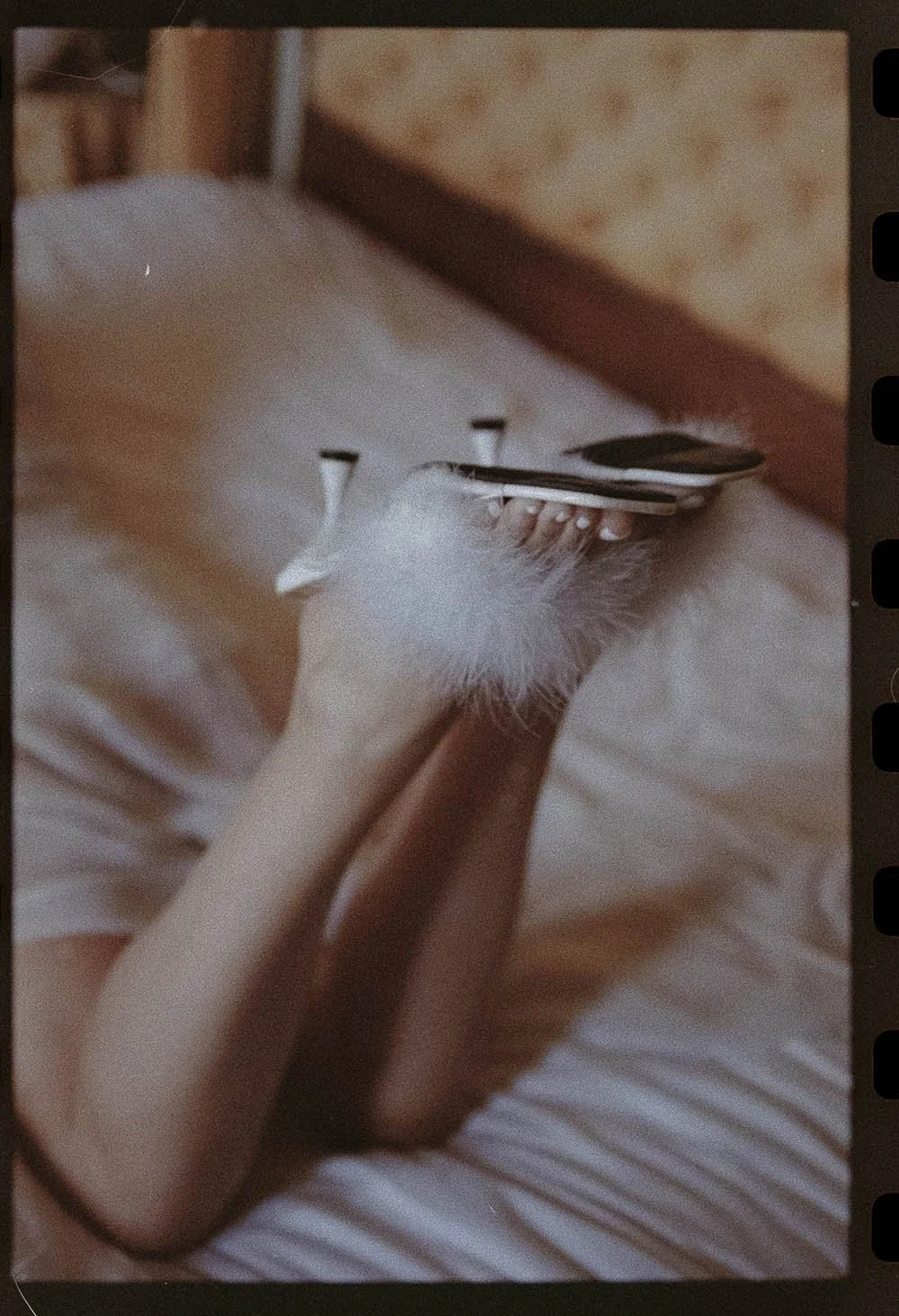
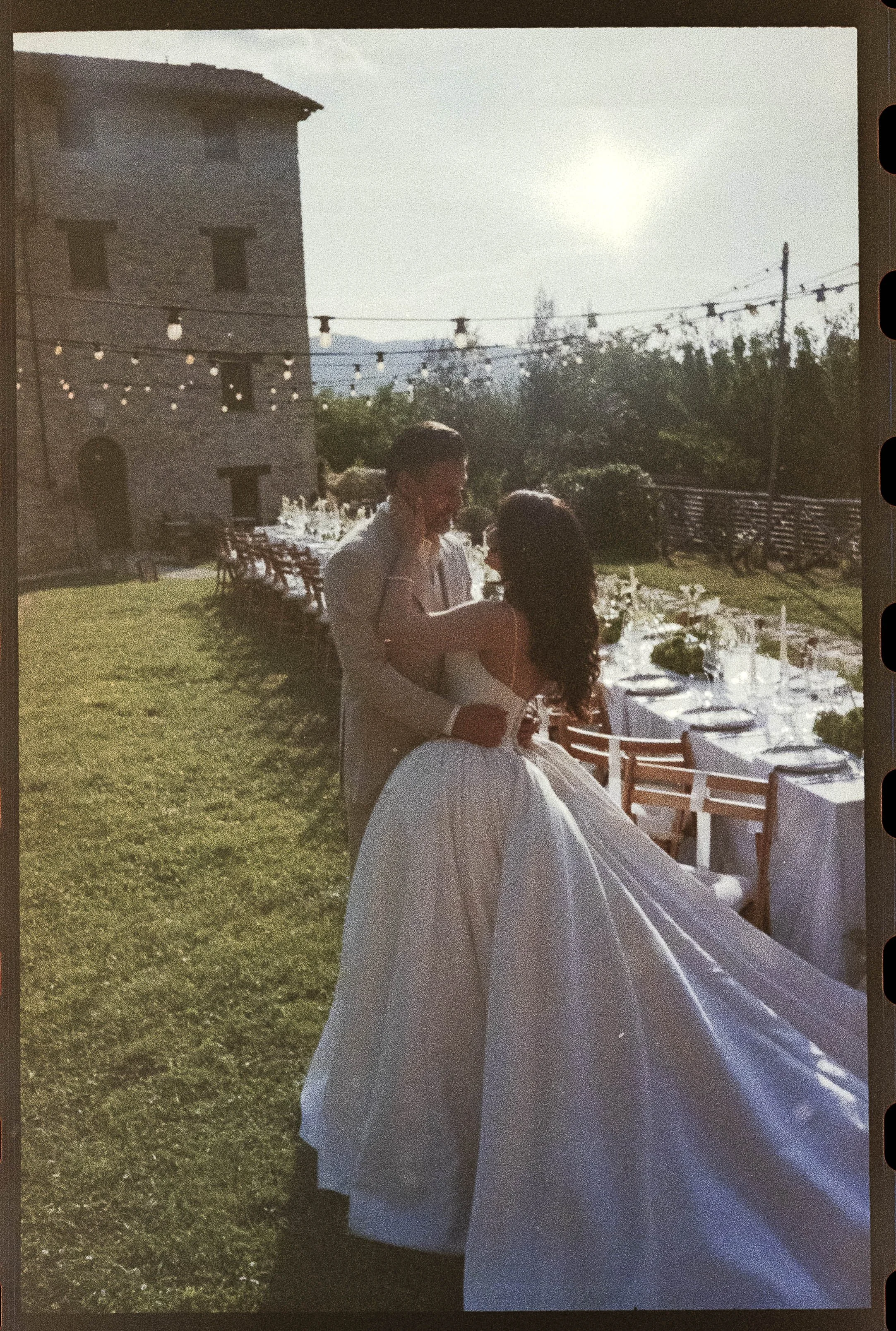
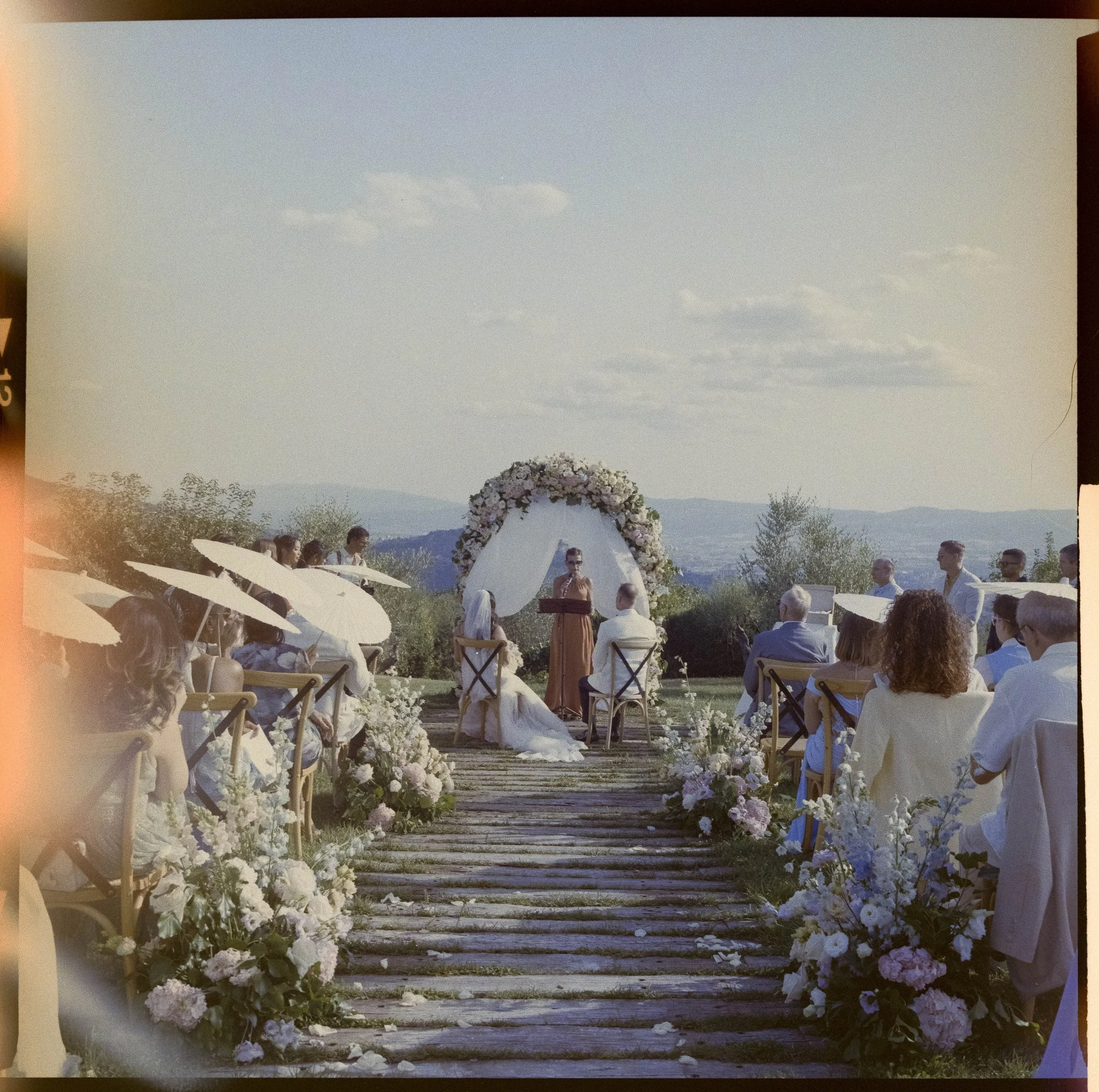
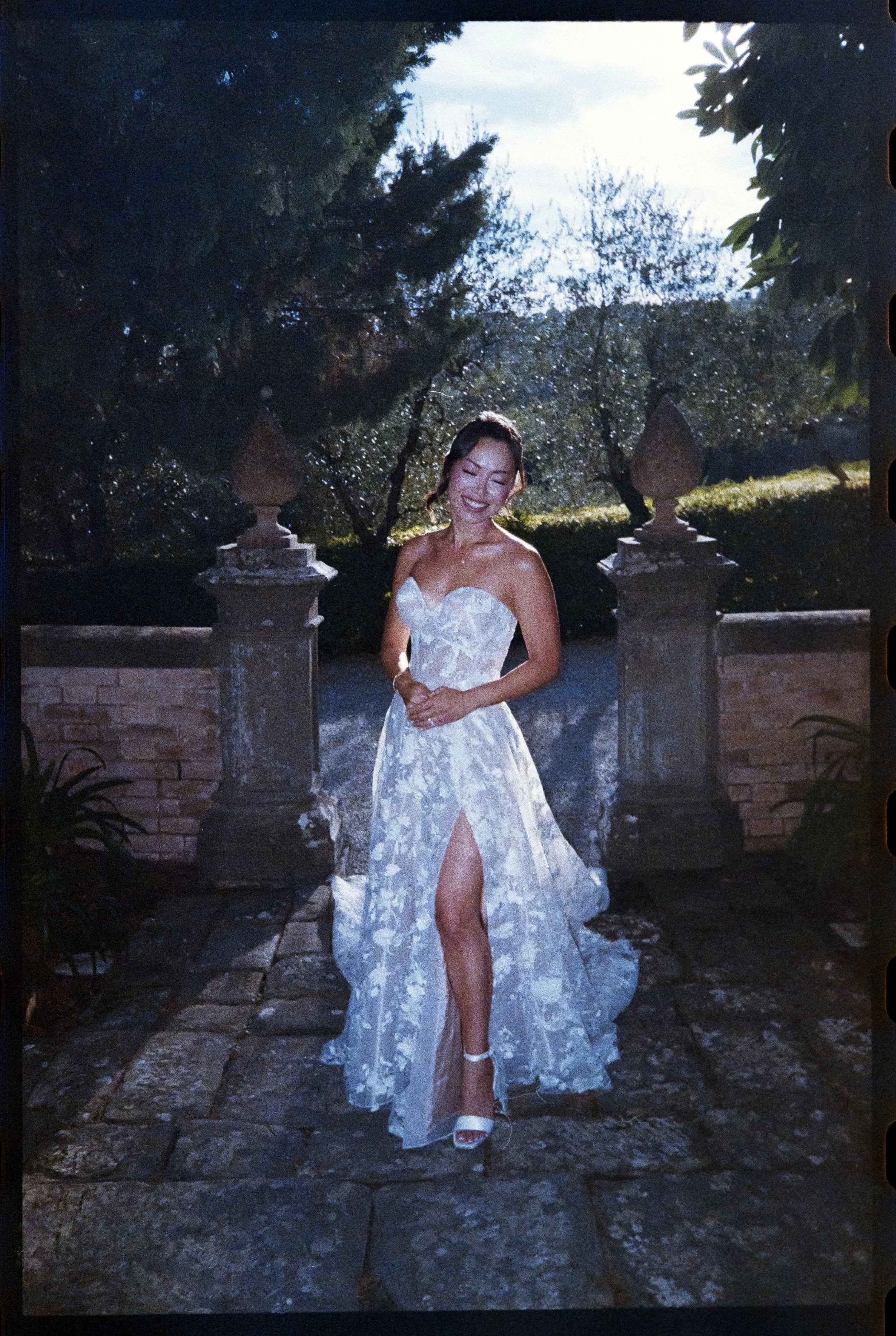
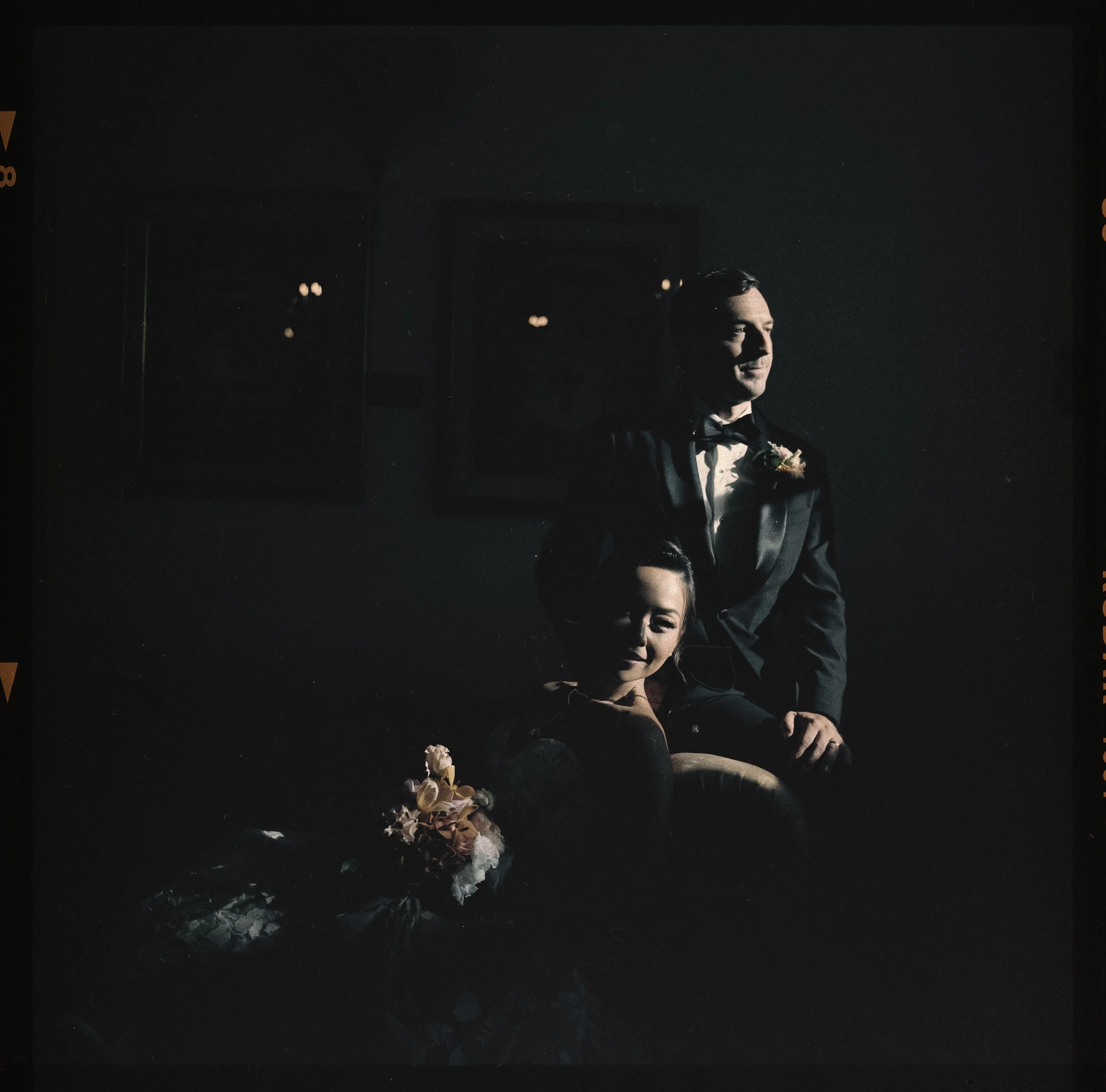
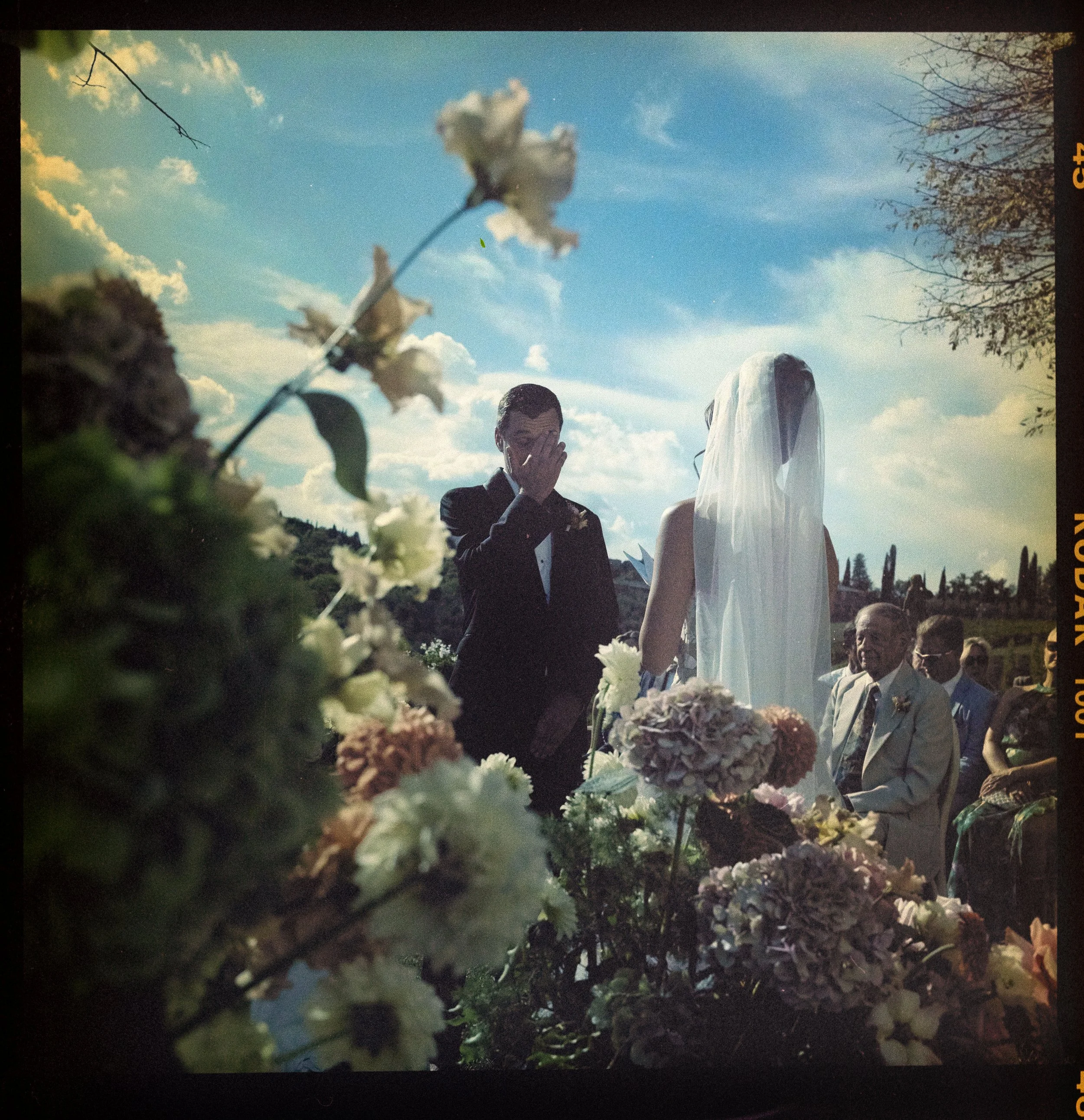
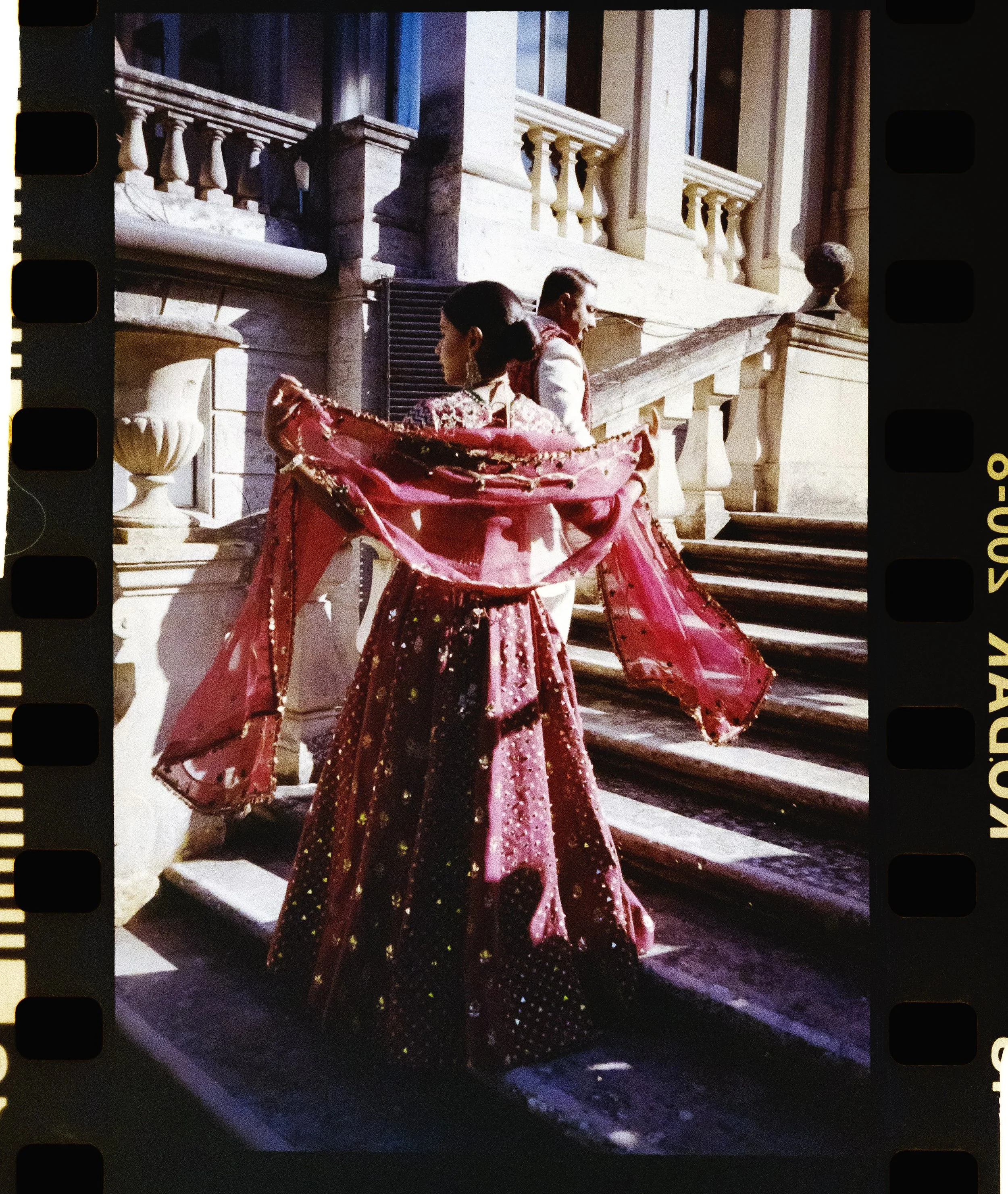
The important thing is to understand what kind of result your photographer produces consistently, rather than assuming that every film photograph will resemble the images you've saved on Pinterest.
Your film photographs will probably arrive as digital files
This is another detail that's often overlooked. Today, most wedding photographers deliver their analogue photographs as digital scans, usually integrated into the online gallery alongside the digital images.
It's true that printed wedding albums have become less common, so the need for extremely large files isn't always as important as it once was. But we've also developed a habit that simply didn't exist during the film era: zooming into photographs on our phones and computers as though every image contained unlimited detail.
Modern digital cameras have made us accustomed to extraordinary sharpness and resolution. A scan from an inexpensive point-and-shoot camera might look beautiful at first glance but become disappointing when enlarged. A well-exposed professional 35mm photograph will often perform better, while a properly scanned medium-format negative can reveal an entirely different level of detail.
Of course, the quality of the scan matters enormously. Even a magnificent negative can lose much of its potential through poor scanning.
When choosing a film wedding photographer, don't just ask whether they shoot analogue. Ask what cameras they use, what film they choose and how the photographs are developed and scanned.
04 / THE LIMITATIONS OF FILM THAT NOBODY TALKS ABOUT
Why light matters more than you might imagine
We're all accustomed to taking surprisingly good photographs in dark environments with our smartphones. An iPhone can photograph a candlelit room and produce an image that looks bright, detailed and colourful, thanks to sophisticated computational photography.
Film doesn't have that luxury.
With analogue photography, the sensitivity of the film is determined by the film you load into the camera. If you're shooting with a relatively slow film in a dark room, you'll need a wider aperture, a slower shutter speed or additional lighting. Otherwise, you risk underexposure or unwanted motion blur.
This becomes particularly important during wedding preparations, indoor ceremonies and evening receptions. In dark environments, flash photography is often the most reliable solution, which also explains why the direct-flash aesthetic became so closely associated with analogue photography.
There's another practical complication. Imagine photographing a bride getting ready in a relatively dark room, then stepping outside into the bright Italian sunshine to capture the ceremony setting. Ideally, those situations might require two different film speeds. With a digital camera, changing ISO takes a fraction of a second. With film, you're generally committed to the roll already loaded until it's finished, unless you're using interchangeable film backs or another camera.
We remember this aspect of analogue photography particularly well from our early weddings. You learned to anticipate the light, plan your rolls and make decisions before the moment happened. It wasn't necessarily better or worse than digital photography, just a very different way of working.
And it's one of the reasons why experienced film photographers often carry multiple cameras.
05 / WHAT TO LOOK FOR WHEN HIRING A FILM WEDDING PHOTOGRAPHER
Our suggestions, based on years of working with both film and digital photography
If you're considering analogue wedding photography, these are the things we believe are genuinely worth discussing before booking.
1. Decide how important film photography will be within your wedding coverage.
For most couples, analogue photography works beautifully as an addition to the digital service. It introduces a different approach during selected moments without replacing the flexibility and reliability of digital cameras. In this situation, a good 35mm camera can be the perfect choice.
2. Ask whether your photographer shoots colour, black-and-white, or both.
If your photographer carries only one analogue camera, they'll generally need to choose which film to load. That means they might photograph certain moments in colour and others in black-and-white, depending on the roll currently inside the camera. Feel free to discuss your preferences beforehand rather than assuming you'll receive both versions of every film photograph.
3. If you want film to play a major role, look for a two-camera setup.
For more extensive analogue coverage, we believe it makes sense to work with at least two film cameras, one loaded with colour and the other with black-and-white. Ideally, one of those cameras should be medium format, allowing the photographer to offer a genuinely different level of image quality and creative expression.
4. Look at real film photographs, not digital images edited to resemble film.
Digital presets can reproduce many analogue characteristics, including grain, faded colours and reduced contrast. But if you're paying for actual film photography, ask to see examples captured on film. Ideally, look at a complete selection rather than just a few favourite images.
5. Pay attention to quality, not just atmosphere.
A photograph shouldn't automatically be considered beautiful simply because it's grainy, blurred or taken with an old camera. Look at skin tones, details, focus, composition and the overall consistency of the photographer's work. The analogue aesthetic should enhance a good photograph, not become an excuse for a poor one.
6. Ask about scanning, delivery and prints.
Will you receive high-resolution scans? Are the negatives professionally developed? Can you order fine-art prints? And does the photographer offer traditional darkroom printing? These details can make a significant difference, particularly if you want to enjoy your analogue photographs beyond a phone screen.
7. Choose someone who knows when not to shoot film.
This might be our most important suggestion. Film photography has limitations, particularly in difficult lighting conditions or fast-moving situations. A photographer who understands those limitations will know when analogue is the right creative choice and when digital photography will produce a better result.
06 / THE NATURAL DESTINATION OF A FILM PHOTOGRAPH: A FINE-ART PRINT
From a negative to something you can actually hold
There's one aspect of analogue photography that we believe deserves much more attention: the final print.
Today, we spend so much time discussing cameras, film stocks, colours and scanning that we sometimes forget what film photography was originally designed to produce.
A physical photograph.
And while viewing a beautifully scanned negative on a screen can be wonderful, there's something fundamentally different about holding a photographic print in your hands.
A fine-art print is a photograph produced with particular attention to image quality, tonal reproduction, archival materials and presentation. Modern fine-art prints are often created using high-quality pigment inks on carefully selected papers, designed to preserve the image beautifully for many years.
But traditional black-and-white film photography offers another possibility: a photograph printed by hand in a darkroom, directly from the original negative.
Bringing Our Darkroom Back to Life
This is something particularly close to our hearts.
When we started photographing, the darkroom was a natural part of the photographic process. Watching an image slowly appear on photographic paper in the developing tray was one of those experiences that made us fall in love with photography in the first place.
And after so many years working with digital technology, we've decided to bring that experience back.
At Rellini Art Studio, we're reopening our darkroom to offer handmade black-and-white photographic prints from our film negatives.
These aren't digital reproductions or inkjet prints. They're traditional photographic prints, created by exposing light-sensitive paper through the original negative and developing it using the classic chemical process.
Each print is made individually, with careful attention to exposure, contrast and tonal balance. Small adjustments during printing can subtly influence the final image, making the process both technical and deeply personal.
We particularly love the idea of taking one of our 6×6 medium-format wedding portraits and transforming it into a beautiful silver-gelatin print, presented with a generous passe-partout and ready to be framed.
Something you can hang in your home. Something that exists beyond a digital gallery, a phone or a computer.
And because each photograph is printed by hand, every print has its own individual character.
In a world where images are created, shared and forgotten in seconds, we love the idea of making something that asks to be kept.
For us, this feels like the most natural conclusion to the analogue photographic process: from the moment the light reaches the negative to the moment the finished photograph is placed on a wall.
07 / OUR APPROACH TO FILM PHOTOGRAPHY AT RELLINI ART STUDIO
A familiar medium, rediscovered with a different perspective
Our first wedding was photographed in 2001, when we were still very young and film was simply part of everyday professional photography. We learned to work with its limitations long before digital cameras made everything faster and more flexible.
Looking back, we don't particularly miss having to change rolls at inconvenient moments or worrying about whether we'd chosen the right film for the available light. Digital photography has brought extraordinary advantages, and we wouldn't want to give them up.
But there are things about film that we've never stopped appreciating: the deliberate pace, the way certain films interpret light, the beauty of a large negative and the satisfaction of creating a physical photograph.
Today, we combine those two worlds.
Our digital cameras remain the foundation of our documentary and editorial wedding photography, allowing us to capture spontaneous moments, difficult lighting conditions and the unpredictable rhythm of a wedding day.
Film becomes a complementary creative language. We use 35mm and 6×6 medium-format cameras, with a particular affection for black-and-white photography, selecting the moments where analogue can genuinely contribute something different.
We don't feel the need to photograph every moment twice. Sometimes a single film portrait, a quiet scene or a beautifully observed detail is enough to introduce another dimension to the story. And now, with the return of our darkroom, we're particularly excited about the possibility of turning some of those photographs into handmade prints that our couples can enjoy for years to come.
08 / IS FILM WEDDING PHOTOGRAPHY REALLY WORTH IT?
We believe it absolutely can be, provided you understand what you're choosing.
Film photography isn't automatically more beautiful, more authentic or more artistic than digital photography. And using an old camera doesn't necessarily make someone a better photographer.
What film offers is a different interpretation of the same moment, with its own colours, textures, limitations and possibilities.
If you love that character, it can become a wonderful addition to your wedding story. But before booking, take the time to understand the differences between cameras, formats, film stocks and scanning quality.
A point-and-shoot camera, a professional 35mm system and a medium-format camera can produce very different results, even when using the same film.
And perhaps consider what you want to do with those photographs afterward.
Because while a digital gallery is a wonderful way to preserve and share memories, there's something uniquely satisfying about seeing one of those memories transformed into a beautiful photographic print.
After all these years, we still believe that some photographs deserve more than a screen.
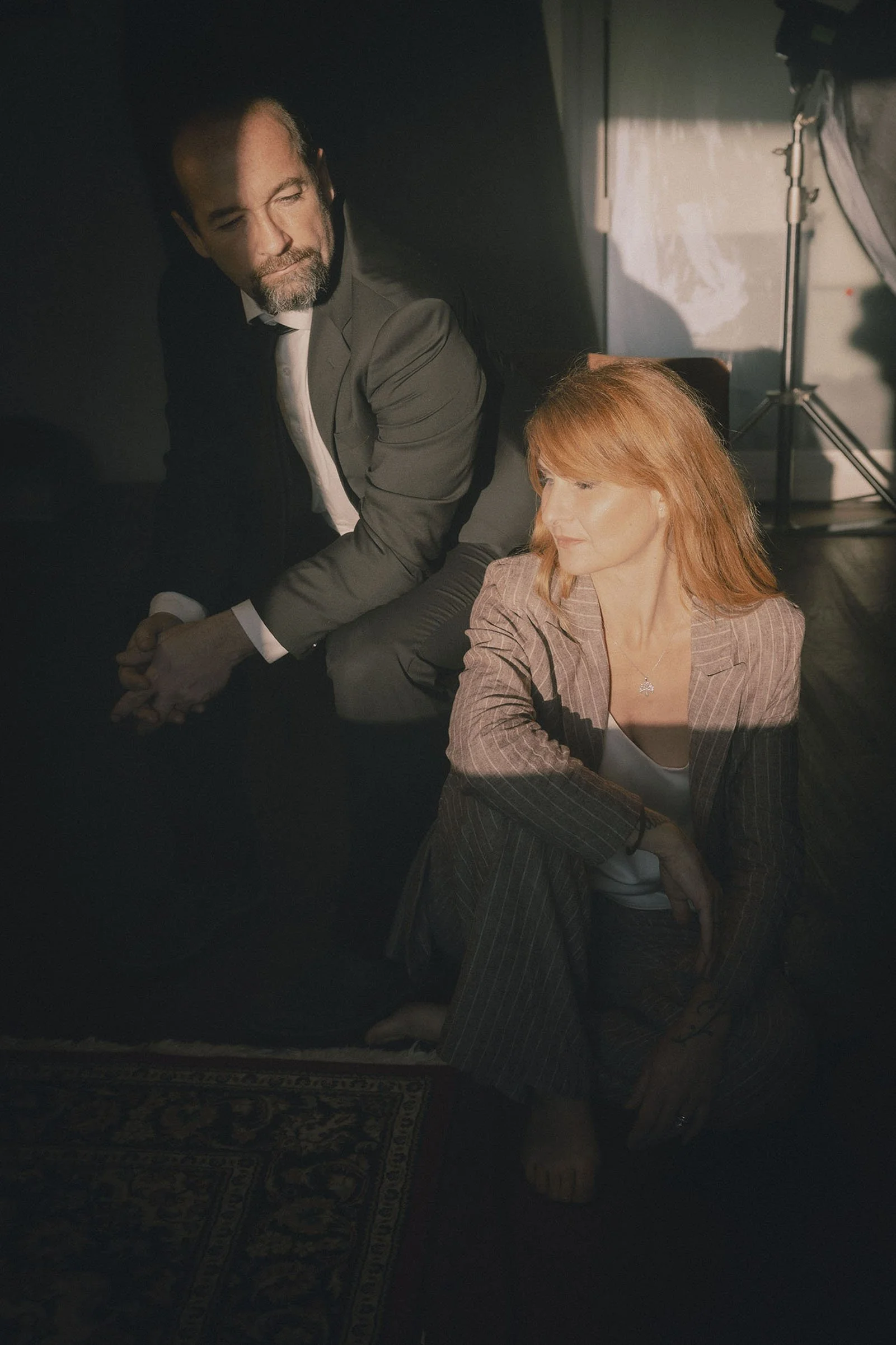
We are Maurizio and Serena, married photographers team based in central Italy with +1000 weddings shot together
If you are interested in working together feel free to reach out, discover our availability and download our price guide
